
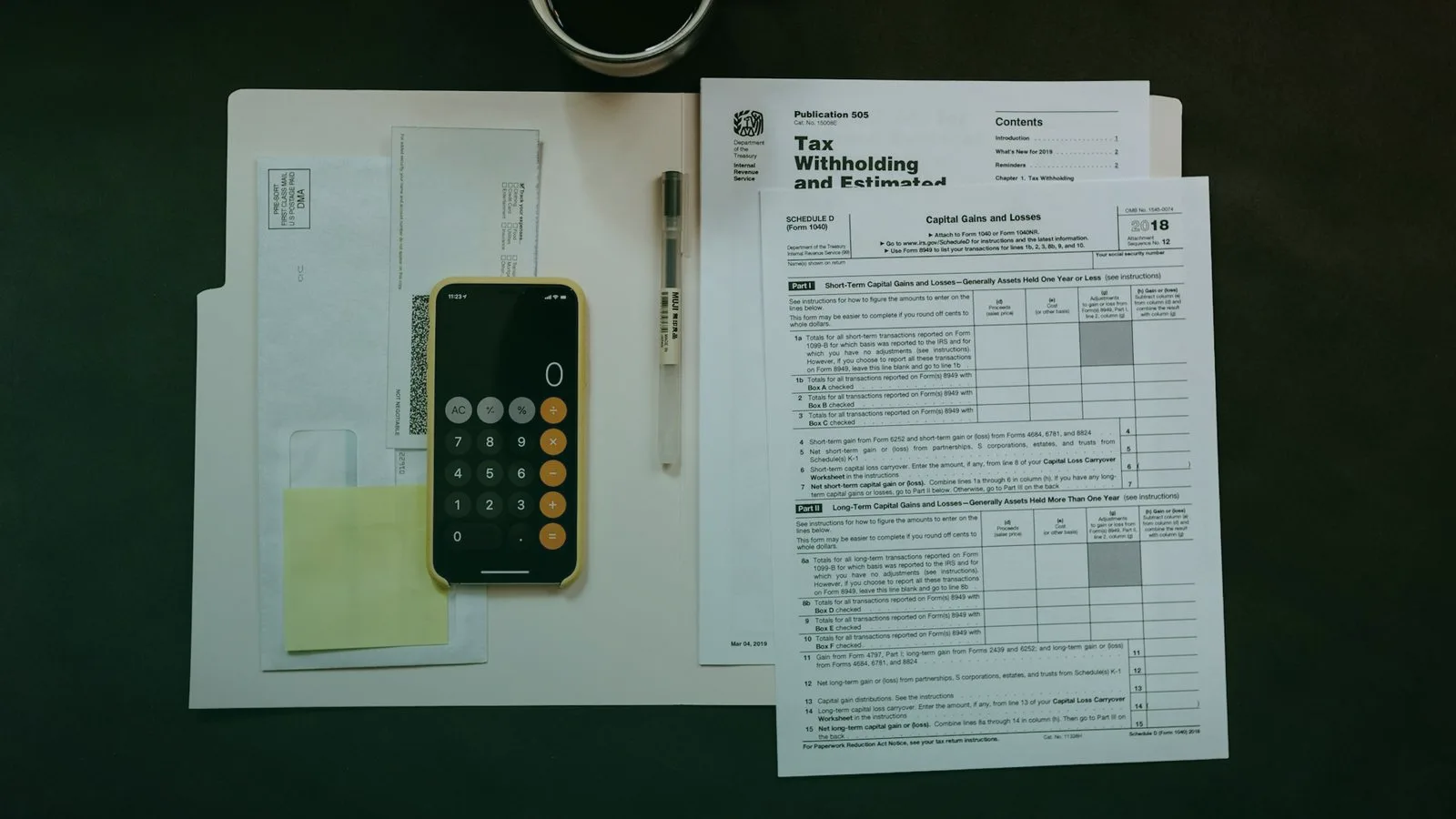
Rental income is taxed after expenses, not on the full rent you collect. The deductions below are the costs of running the property, and they lower the taxable income from the rent.
This post explains the concepts in general terms and is not tax advice. Tax rules change, so check current IRS guidance or talk to a tax professional about your own situation.
The example below uses one rental home: $1,800 a month in rent, or $21,600 a year. Every expense in the example is labelled as an example number.
1. Mortgage interest
The interest part of your rental mortgage payment is a cost of borrowing to own the property. The principal part is not deductible, because it builds your ownership instead of paying for a service.
In the example, mortgage interest is $9,000 for the year. That is the largest single deduction on most rentals, and it shrinks slowly as the loan balance falls.
2. Property taxes and insurance
Property taxes charged on the rental are a deductible rental cost. Insurance premiums for the rental, including landlord and liability cover, are deductible in the same way.
In the example, property taxes are $3,600 for the year and insurance is $1,500. Together they add $5,100 to the deduction total.
3. Repairs and maintenance
Fixing what is broken is a repair, and repairs are generally deductible in the year you pay for them. A leaking tap, a broken fence panel, and a repaint between tenants all count as repairs.
In the example, repairs and maintenance cost $2,400 for the year. Keep every invoice, because a repair without a receipt is hard to prove later.
Improvements are different from repairs, because they add value or extend the life of the property. A new roof or a new kitchen is usually spread over several years instead of deducted at once.
4. Management fees and other running costs
A property manager fee is a deductible cost of running the rental. Advertising for tenants, legal fees for a lease, and travel to the property for rental business are also ordinary rental costs.
In the example, management costs 8 percent of the rent, which is $1,728 on $21,600 of rent. Add the running costs together and the example property has $18,228 of expenses before depreciation.
Rent of $21,600 minus expenses of $18,228 leaves $3,372 of taxable rental income before depreciation. That is the number depreciation then reduces further.
5. Depreciation, the deduction with no cash cost
Depreciation spreads the cost of the building over its useful life, and you claim part of it each year. No cash leaves your account, which is why landlords call it a paper deduction.
Land is never depreciated, because land does not wear out. Only the building part of the purchase price, plus qualifying improvements, goes into the calculation.
For residential rental property, the building is spread over 27.5 years using the straight-line method. A building value of $220,000 divided by 27.5 gives $8,000 of depreciation each year.
Subtract that $8,000 from the $3,372 of taxable income and the example shows a paper loss of $4,628. That loss does not mean the property lost money in cash, and limits can apply to how much of a loss you can use.
Keep records from day one
A simple folder for each property, with every receipt and statement filed the month it arrives, is enough. The rental property checklist covers the records and inspections worth keeping from the first tenant.
Track income and expenses separately from your personal money, even if the property is small. Clean records make the tax return faster and the deductions easier to defend.
If you are new to landlording, the first-time landlord tips post covers tenant screening, leases, and the routines that keep a rental running.
Run the rental cash flow calculator to check whether your own property covers its costs after every expense above.
Deductions reward landlords who track costs, not landlords who guess. Keep the records, check the current rules, and review the numbers with a tax professional before you file.


